The Money Isn't Going Where the Threats Are: A Look at CISO Budgets vs Breach Data
By ScruteXPublished

Put two public datasets side by side, where enterprise CISOs spend and where breaches actually start, and a gap opens up. Budgets still cluster around the categories that defined security five years ago. The attack causes that drive breaches have moved. The result is steady spend on controls that act after an exposure becomes an attack, and thin spend on the external categories where the attack was visible before it began.
This analysis cross-references public CISO budget benchmarks (IANS Research, Gartner, IDC) with public breach-cause reporting (Verizon DBIR, Mandiant M-Trends, IBM Cost of a Data Breach). The sources are public and the patterns are directional, not precise. We have not run a proprietary survey, and we say so where a claim is a pattern rather than a measured figure. The point is not that current budgets are wrong. It is that the mix has not caught up with where attacks now originate.
In This Post
- What the budget data says
- What the breach data says
- Where the gap is widest
- Why budgets lag the threat data
- What it means for 2026 planning
- Caveats on the data
- Key takeaways and FAQ
What the budget data says
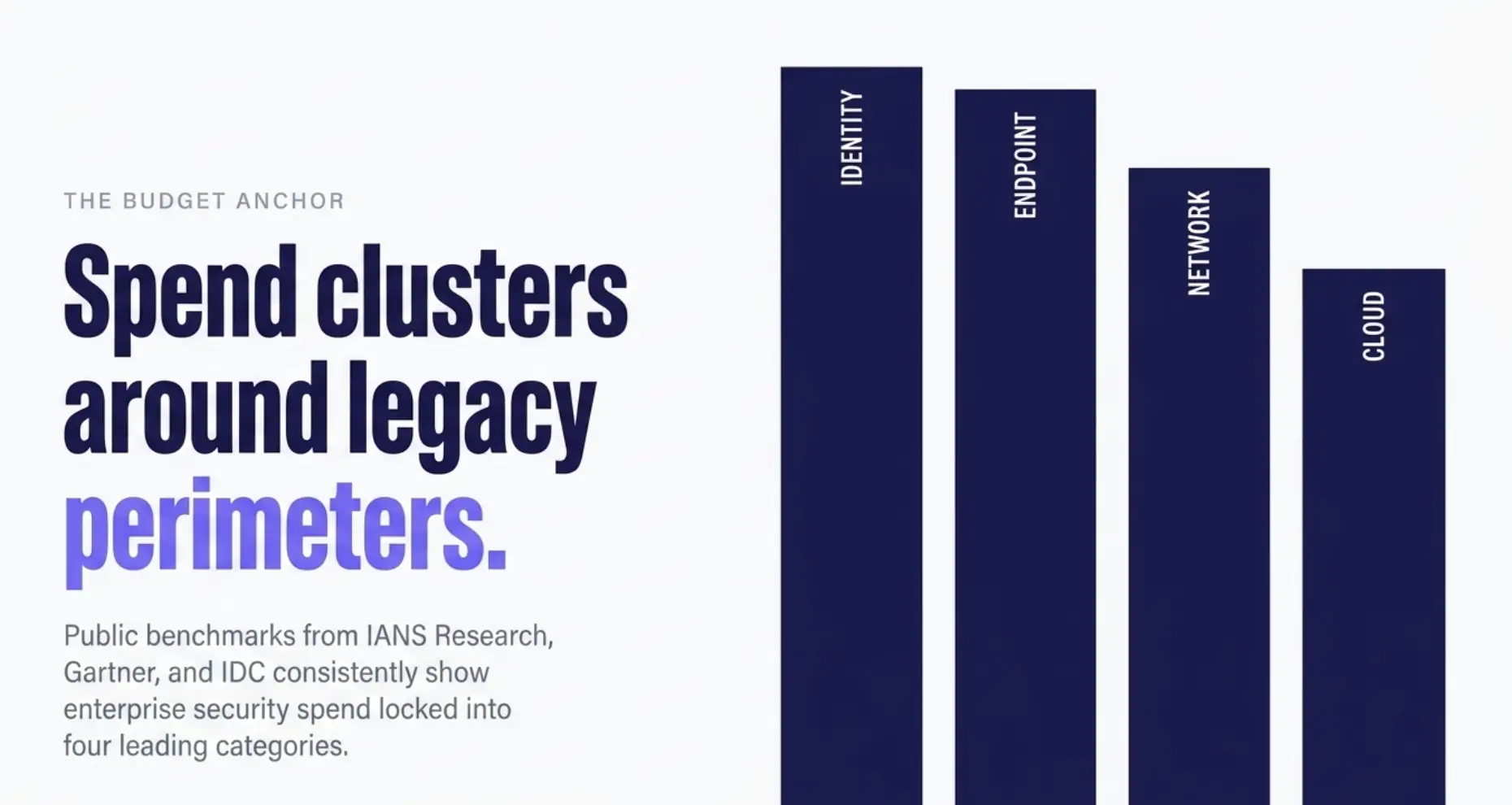
Across the public CISO budget benchmarks, enterprise security spend concentrates in four categories: identity and access management (PAM, MFA, SSO, IGA), endpoint detection and response, network security (firewalls, NDR, segmentation), and cloud security (CSPM, CWPP, CNAPP). Below the top four sit SIEM and SOC operations, vulnerability management, data security, and email security, each usually a smaller share than any of the four leaders.
The categories that consistently take the smallest share are external attack surface management, dark web and credential exposure monitoring, brand protection and customer-facing fraud prevention, third-party monitoring beyond questionnaires, and AI agent or LLM security. Across the public benchmarks, these five consistently take the smallest share of enterprise security spend, well below any of the four leading categories.
What the breach data says
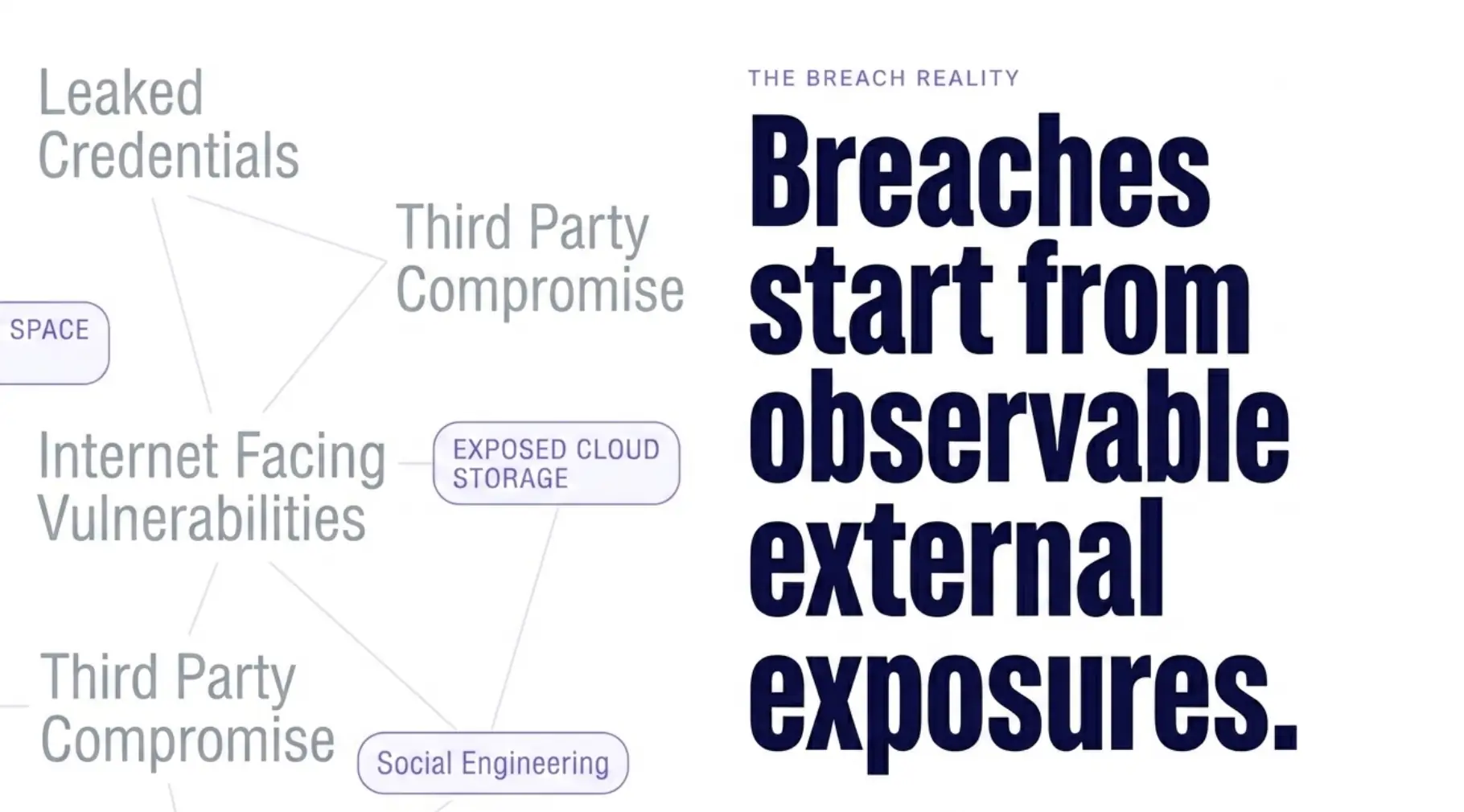
Now look at where breaches start. The reference points are the Verizon DBIR (confirmed incident data), Mandiant M-Trends (incident response engagements), and IBM Cost of a Data Breach (interviewed organisations). Across recent editions, the dominant initial-access vectors are consistent.
Stolen or leaked credentials, frequently sourced from infostealer logs sold on criminal markets or from credential dumps tied to a third party's breach rather than a direct attack on the victim. Exploited vulnerabilities on internet-facing assets, especially edge devices, VPN appliances, and exposed management interfaces. Social engineering and phishing, including business email compromise and increasingly AI-assisted lures. Third-party and supply-chain compromise, where the initial breach sits at a vendor or shared service. And misconfigured or exposed cloud storage and databases, including unauthenticated buckets and open data stores.
The common thread: every one of these originates outside the perimeter and is visible externally before it becomes an incident. They are external exposure problems before they are internal control problems.
Where the gap is widest
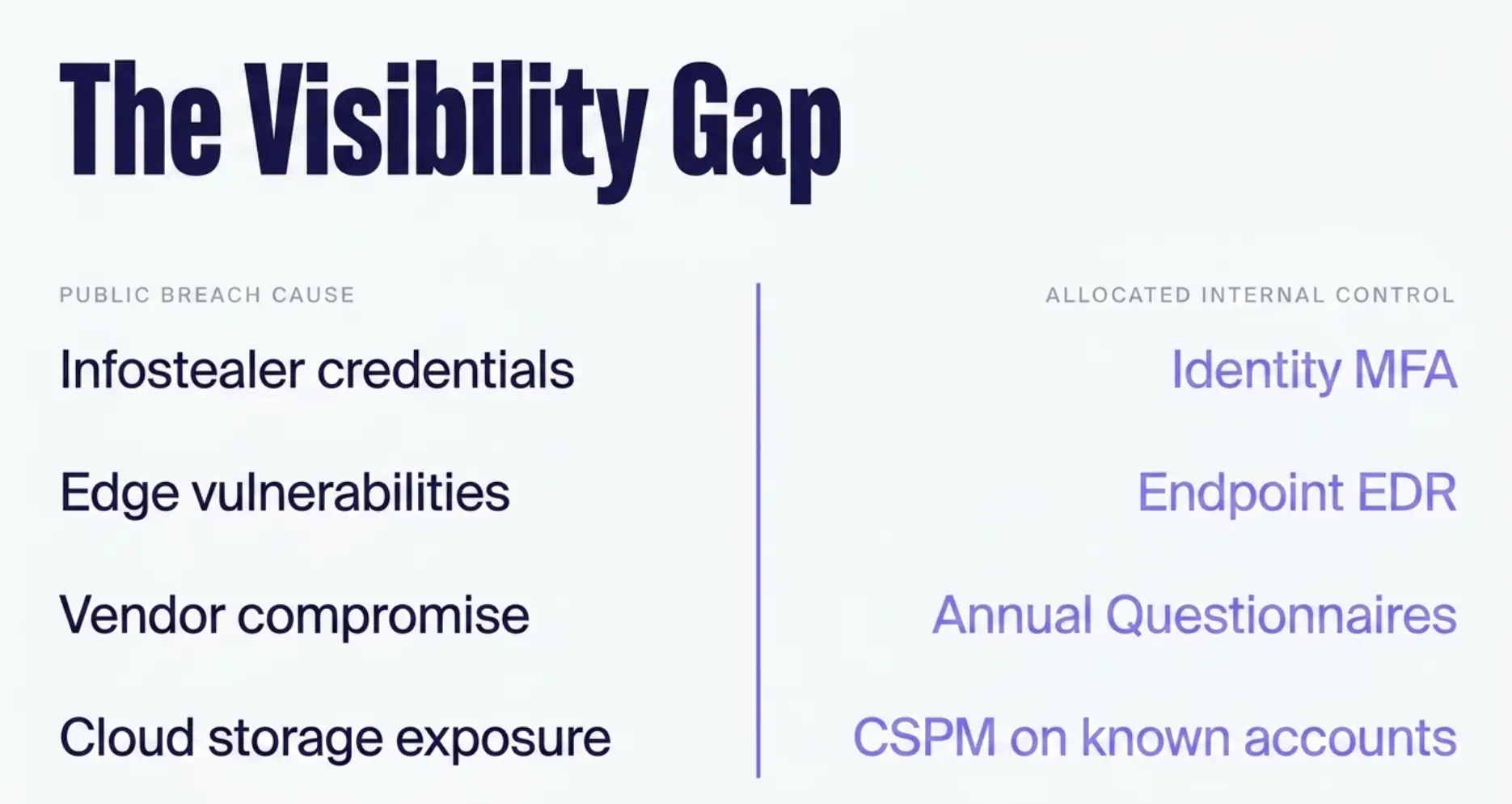
Mapping the two side by side produces the uncomfortable pattern.
| Breach cause (public data) | Where the budget goes | The gap |
|---|---|---|
| Stolen credentials from infostealers and third-party breaches | IAM controls (MFA, SSO) | Detecting the leaked credential before the login attempt is underfunded |
| Exploited internet-facing vulnerabilities | Scanning + EDR | External discovery of unknown assets is underfunded |
| Third-party compromise | Annual vendor questionnaires | Continuous third-party monitoring is underfunded |
| Brand abuse, typosquatting, customer phishing | Email security inside the perimeter | External brand and customer-facing monitoring is underfunded |
| Cloud storage exposure | CSPM on known accounts | External discovery of unknown cloud assets is underfunded |
The pattern repeats down the table. Spend lands on internal controls that fire after an exposure becomes an attack. Breaches keep starting from external exposures that were observable beforehand.
Why budgets lag the threat data
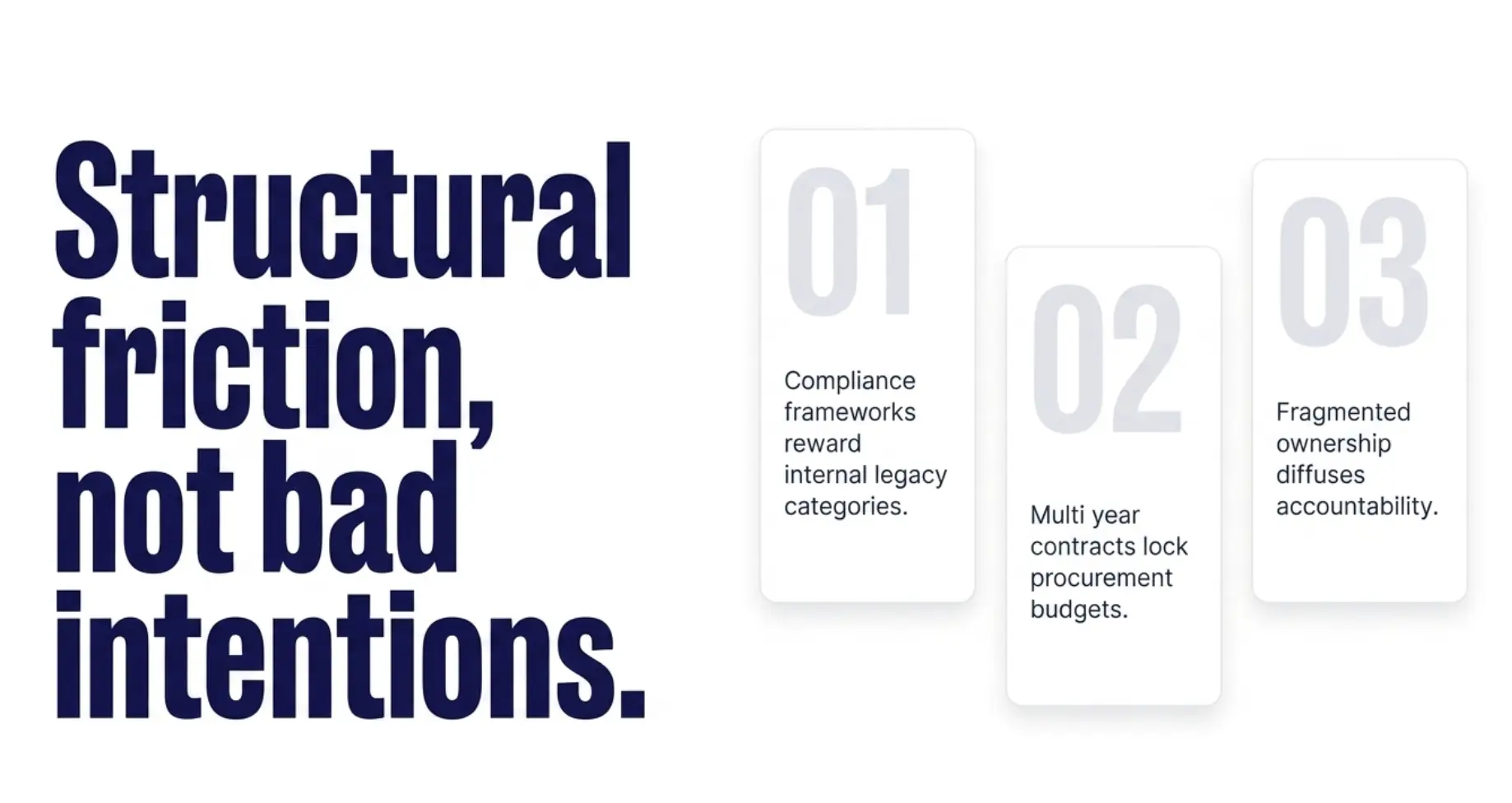
There are structural reasons, not bad intentions.
Compliance frameworks reward the internal categories. PCI DSS, HIPAA, ISO 27001, SOC 2, and NIST CSF all carry explicit, longstanding requirements for IAM, endpoint, network, and cloud. External exposure monitoring is newer and less prescriptive in legacy frameworks, and budget follows audit pressure.
The dominant categories were sold as flagship products in the last procurement cycle. Multi-year EDR, IAM, and SIEM contracts lock budget in. Adding a new external category usually means trimming elsewhere, which is harder than renewing.
Ownership for external exposures is fragmented. Leaked credentials straddle IAM and CTI. Brand abuse crosses security, marketing, and legal. Third-party monitoring crosses security and procurement. Fragmented ownership means no single budget line gets full attention.
Internal controls produce visible metrics; external work produces avoided incidents. "MFA deployed on 95% of accounts" is easy to show. "We took down 14 phishing domains last quarter and cut inbound credential fraud" is harder to put on a slide, even when it protects more customers.
What it means for 2026 planning
A few practical implications for the budget conversation.
Trace at least one budget line back to the dominant external breach causes. If the IAM line cannot show how it addresses externally leaked credentials specifically, the line is incomplete.
Treat third-party monitoring as a continuous discipline, not an annual questionnaire. The category needs a tool and an owner, not just a contract clause.
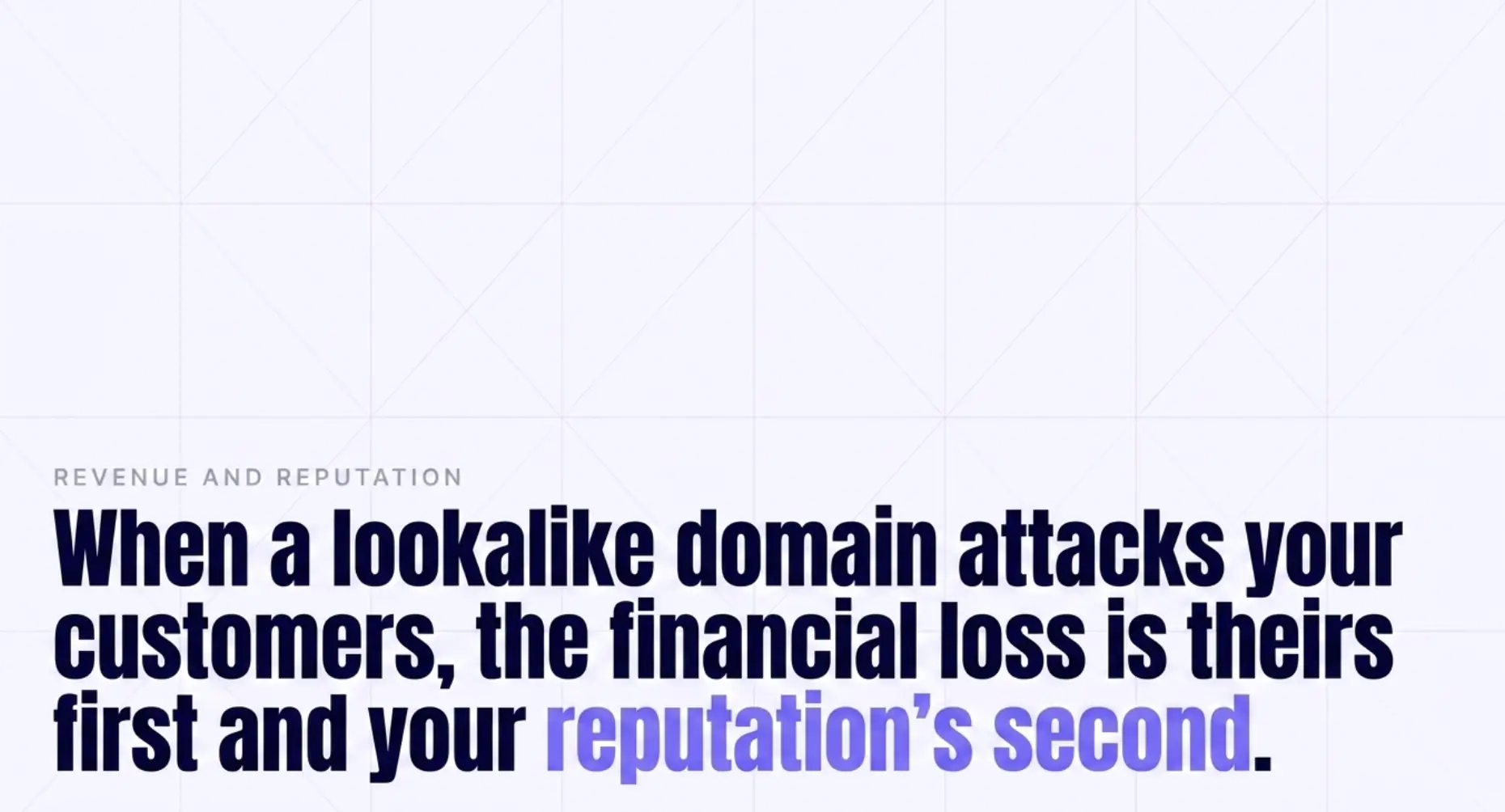
Make brand and customer-facing fraud visible in the security budget, not buried in marketing. It is one of the most direct revenue-protection and customer-protection cases a security team can make. When a lookalike domain phishes your customers, the loss is theirs first and your reputation's second.
Right-size external attack surface discovery. Most enterprises underspend here relative to its breach contribution, and the first dollars usually surface assets nobody knew existed.
Build the AI agent exposure category before it shows up in next year's breach data. The early signals (leaked provider API keys, system prompts in public repositories, injection-campaign chatter on criminal forums) are already external and findable.
Caveats on the data
A few honest qualifications. Budget benchmarks vary by sector, geography, and revenue band; financial services, healthcare, and government do not look alike, and the patterns above best represent mid-to-large enterprise averages. The breach reports use different methods, confirmed incidents, IR engagements, and interviews, so directional agreement matters more than any single percentage. And some of the gap is already moving: CTEM, EASM, and dark web monitoring are growing line items in recent vendor revenue data, though slower than the threat shift. Treat every figure here as directional and check the primary reports for your sector before you build a budget on them.
Key takeaways
- Public CISO budget benchmarks concentrate on IAM, EDR, network, and cloud.
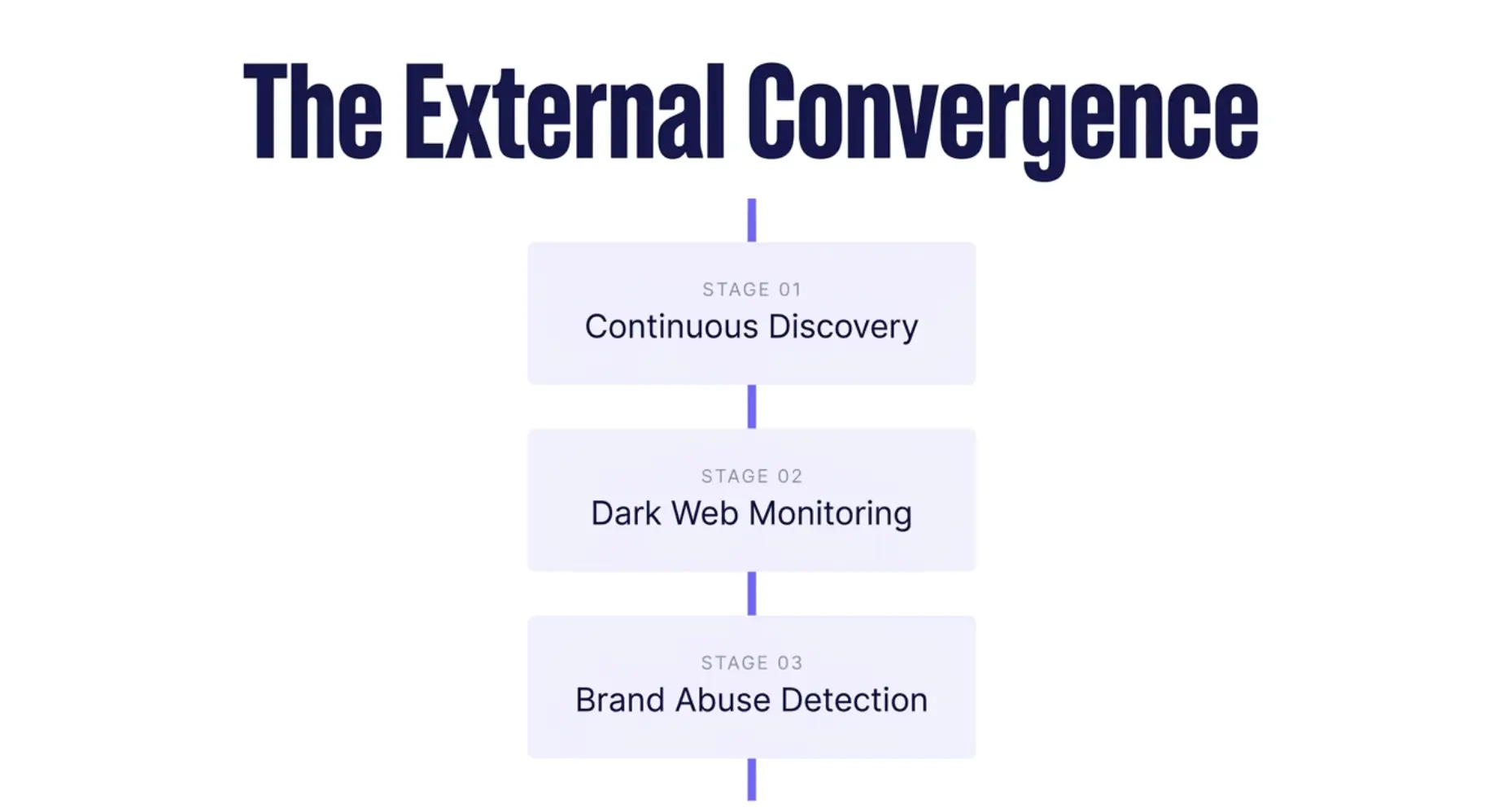
- Public breach-cause data points to stolen credentials, exposed internet-facing assets, third-party compromise, brand abuse, and cloud exposure as the leading initial-access vectors.
- All of those originate outside the perimeter and are visible externally before they become incidents.
- The external categories are consistently underfunded relative to their breach contribution.
- The fix is not to cut IAM or EDR. It is to right-size the external categories.
How ScruteX helps close the external gap
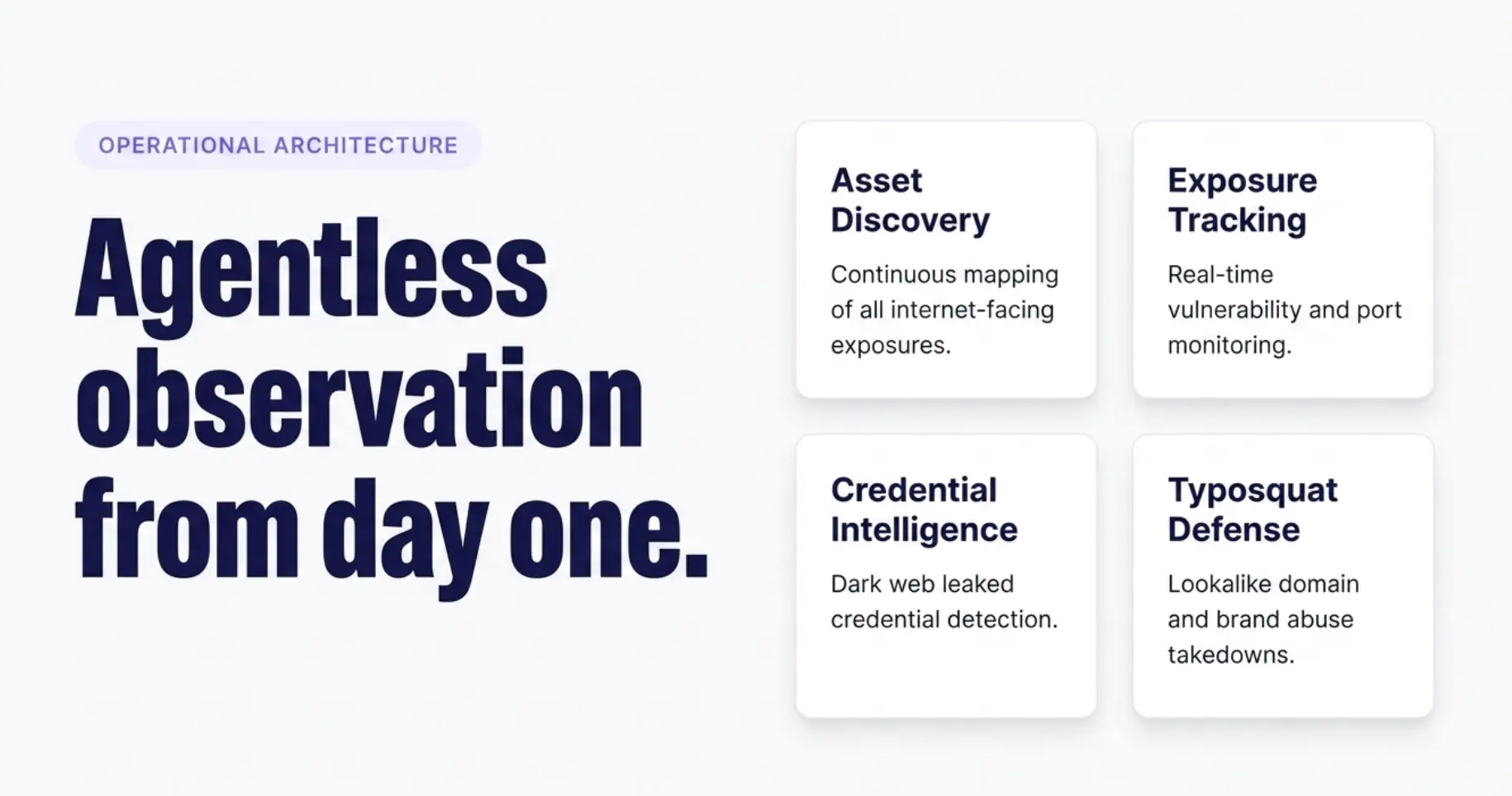
ScruteX covers the external categories that show up underfunded in most CISO budgets: continuous discovery of internet-facing assets, dark web and leaked credential monitoring, brand abuse and typosquat detection, and third-party exposure tracking. The model is agentless and operational from day one, which keeps the cost-to-coverage ratio defensible in the budget conversation. It complements IAM, EDR, and cloud spend rather than competing with it. See scrutex.ai for module details.
FAQ
Q: Where are CISOs allocating most of their security budget?
A: Public benchmarks from IANS Research, Gartner, and IDC consistently show identity and access management, endpoint detection and response, network security, and cloud security as the largest categories of enterprise security spend.
Q: What are the leading causes of data breaches?
A: According to public reports including the Verizon DBIR, Mandiant M-Trends, and IBM Cost of a Data Breach, the dominant initial-access vectors are stolen or leaked credentials, exploited internet-facing vulnerabilities, social engineering, third-party compromise, and misconfigured cloud assets.
Q: Why do CISO budgets lag the threat data?
A: Three structural reasons: compliance frameworks reward the established internal categories, multi-year contracts on existing tools lock budget in place, and external exposure categories have fragmented ownership across security, IAM, marketing, and procurement.
Q: How much should an enterprise spend on external attack surface management?
A: There is no single benchmark. The gap is most visible when external categories combined make up only single-digit percentages of the security budget while contributing meaningfully to breach origin in the public data.
Q: What is the fastest way to close the external exposure budget gap?
A: Add continuous external attack surface discovery and dark web credential monitoring as standalone budget lines, each with a named owner and measurable outputs. Both produce visible findings quickly and build the case for further allocation.
Q: Is the budget shift already happening?
A: Vendor revenue data and Gartner CTEM coverage show external attack surface management, dark web monitoring, and exposure management growing faster than the overall security market, but slower than the underlying change in attack patterns.